The global activewear market is evolving rapidly. The global market insights suggest an increased value of $430.2 billion in 2025 and project an expansion of $458.7 billion in 2026. This increased market revenue is a result of health-conscious athletes and fitness enthusiasts who choose performance clothing, healthy lifestyle and athleisure. There has been a more lucrative window for starting a custom sports apparel brand.
Building a successful athletic line is much more than an Instagram page or a logo design. It requires vast knowledge of technicalities, strategic product development, fabrics, and supply chain management.
This blog can help you learn how to start a sports clothing line. This is a complete guide to help you understand the high-performance cross-training and streetwear-infused athleisure range. Moreover, you will get to know the roadmap to business development, fiber selection and full-scale apparel production.
1. Define Your Performance Niche
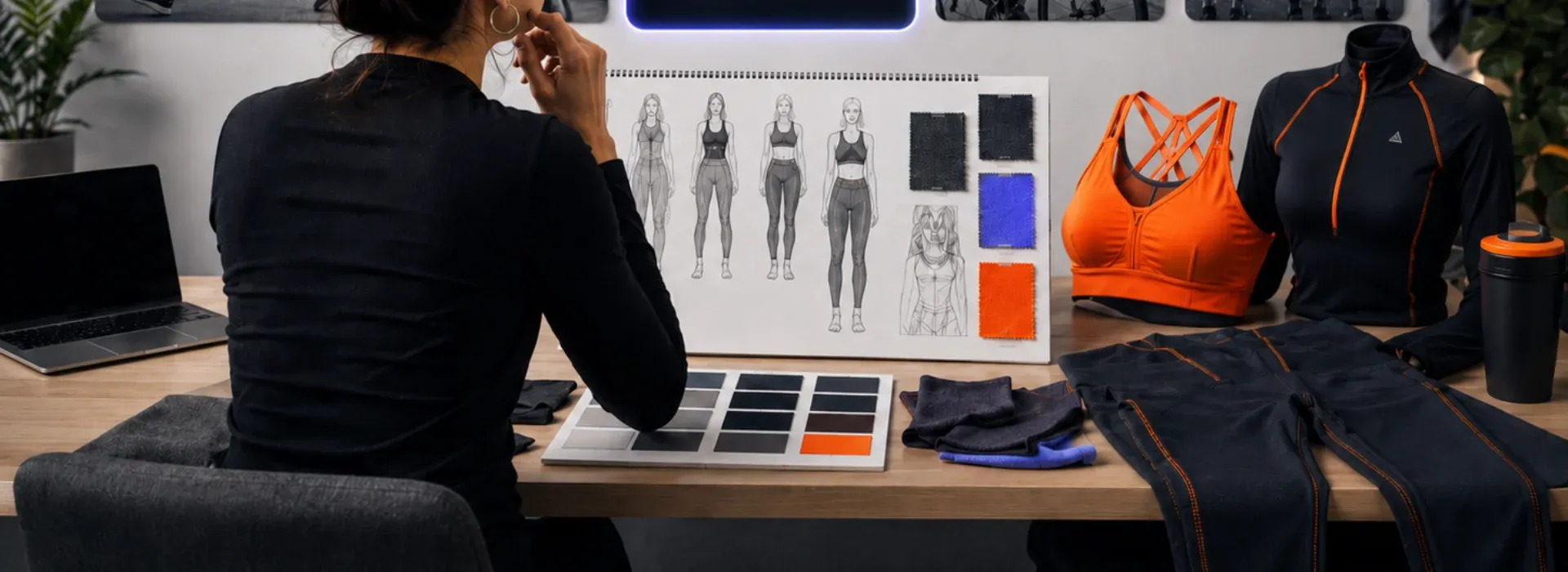
Athletic wear is a broad and oversaturated category, which is difficult to cater to. To overcome your burden and scale an advanced sports apparel brand, develop a product line that addresses a distinct user problem within a specific niche.
Ask yourself what exactly you want to be engineered. Do you want moisture-wicking clothes, UV radiation-blocking apparel, squat-proof wrap knits for competitive powerlifters or sustainable antimicrobial technical fabrics for yoga practitioners?
Athletes have different clothing needs based on their physical movements, thermoregulation, and lifestyle. Therefore, every piece of sports clothing designed is engineered according to their requirements and body movements. If you are targeting fitness enthusiasts or sportsmen, it is significant to master the distinct prerequisites. You can learn how to start a gym clothing line to understand how a particular target positioning functions in practice.
2. Market Research and Identify the Gaps
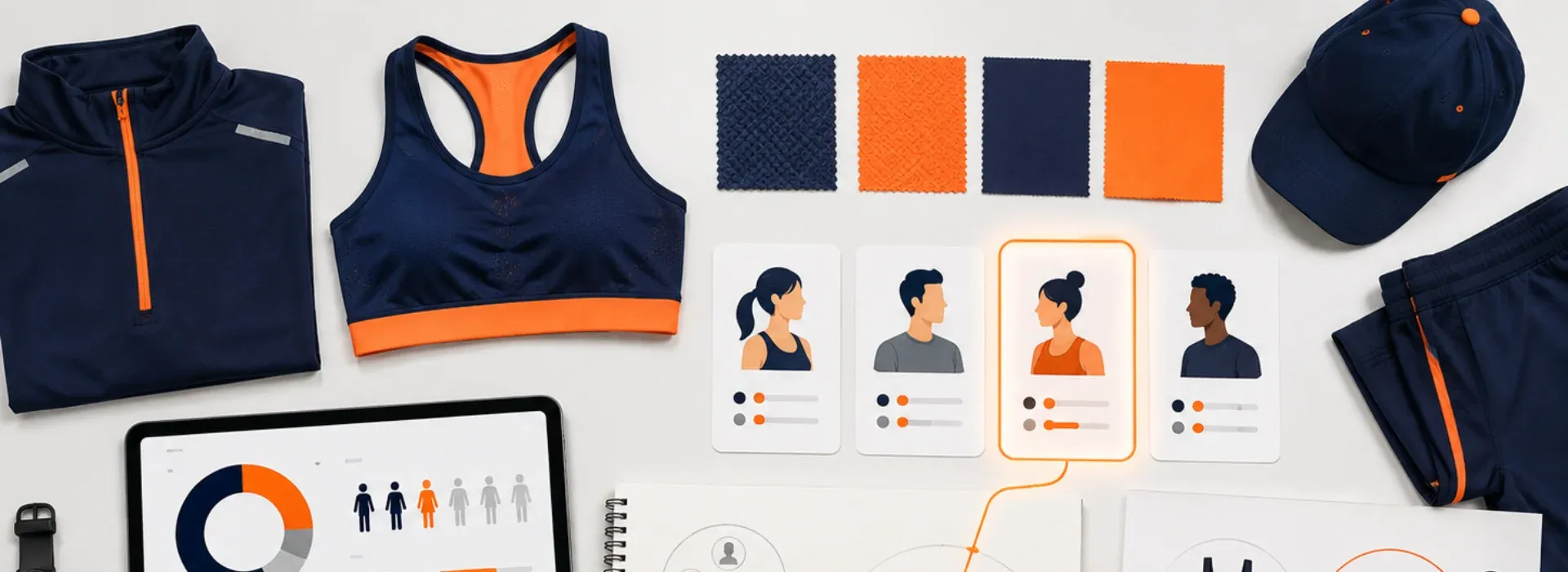
Market research is the core element that defines which products and services you can offer to launch and run your sportswear clothing line. People make a mistake believing that building brand identity without finding the market gap or problems can work in their favor.
Entrepreneurs should discover a distinct gap in the sportswear market through their competitor analysis, market trends, grit, determination, and strategic planning. Brands like Nike, Adidas, and other legacy sportswear giants understand the market needs first before launching a product. An Australian sportswear brand named 2XU learned that athletes need high-compression gear for performance and recovery and offered them exactly what they wanted. This approach became a problem-solving step for the customers.
Therefore, your brand can become renowned by filling the market gaps. You will gain direction for your brand. If you need more clarity, ask yourself these two questions:
1. What can I offer that isn’t already in the market? 2. What other brands aren’t offering?It isn’t necessary to offer an entirely new product since the market is saturated and fully equipped with countless product ideas. You can add a unique feature in the sportswear that can help athletes improve their game or reduce their physical effort or fatigue.
3. Identify Your Target Market
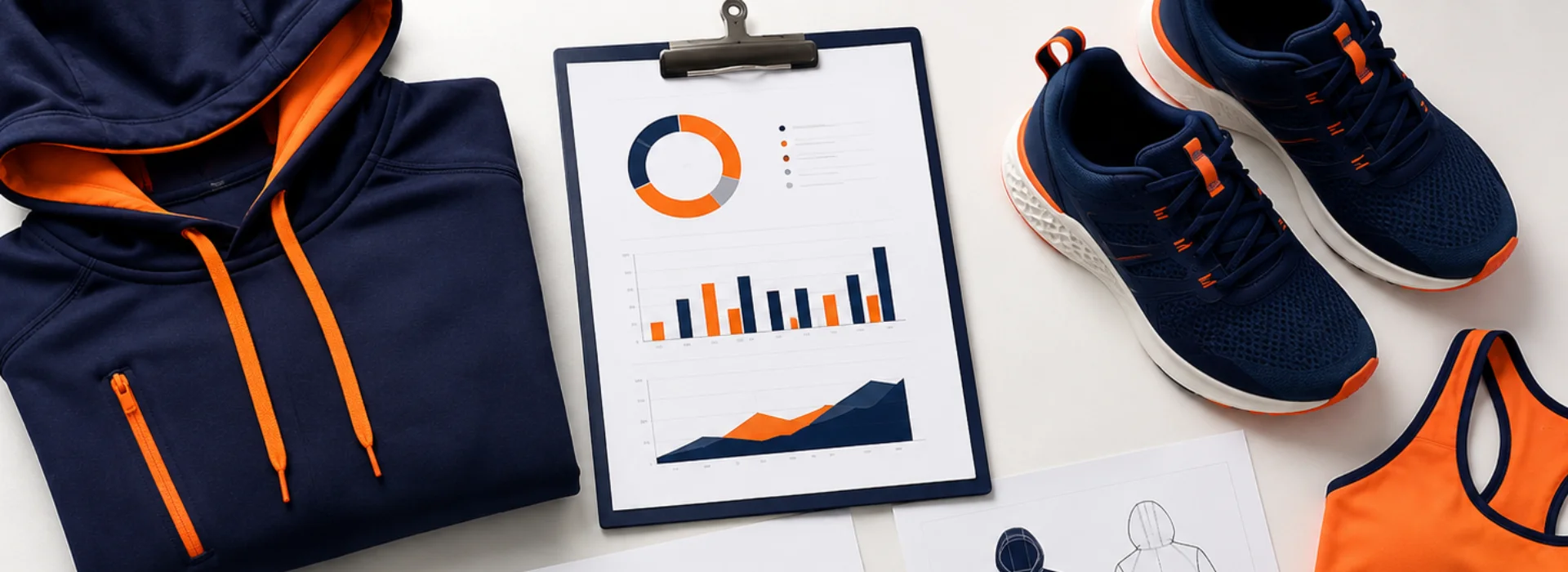
Once you are done with problem identification, your next step is to build a customer avatar. This will tell you how to design your products, market them properly, and identify who the buyers will be.
Consider the following key factors:
- Consider the demographics like locations, age, occupation, marital status, and number of people.
- Learn about their preferred sports activities, performance-focused clothing, or casual clothing.
- Find out about their favorite physical activities, their jobs, and social activities involving sports.
- Lastly, the problems they are facing in terms of clothing, and what solutions can you provide?
With the help of these details, you can tailor sportswear that reflects customer needs, making your brand a solution to all their problems. This will make you stand out in the competitive sports apparel market.
4. Create a Business Plan
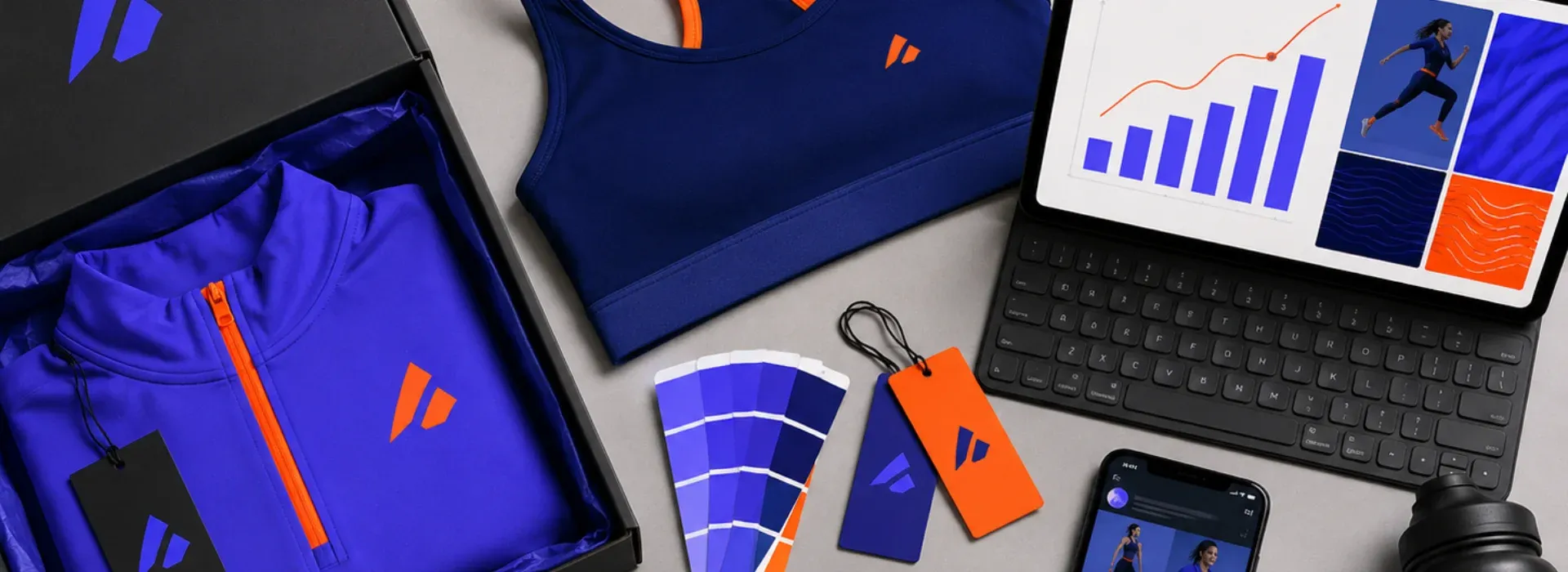
A business plan is your roadmap to executing business operations effectively in a linear order. Your plan will guide you on everything from capital investment and business registration to labor recruitment and amenities. Overall, it will keep you on the track to a successful brand launch.
5. Design a Logo and Choose a Brand Name

Both the logo and brand name are the significant aspects of a business. Many people choose random logos and names that are easily forgettable. You need to help your customers connect with your brand. The only way to do it is custom logos and brand names with a background story. Don’t go for random selections. Instead, find an emotional anchor to tie it with your brand name. This also helps in branding.
6. Design Your Products
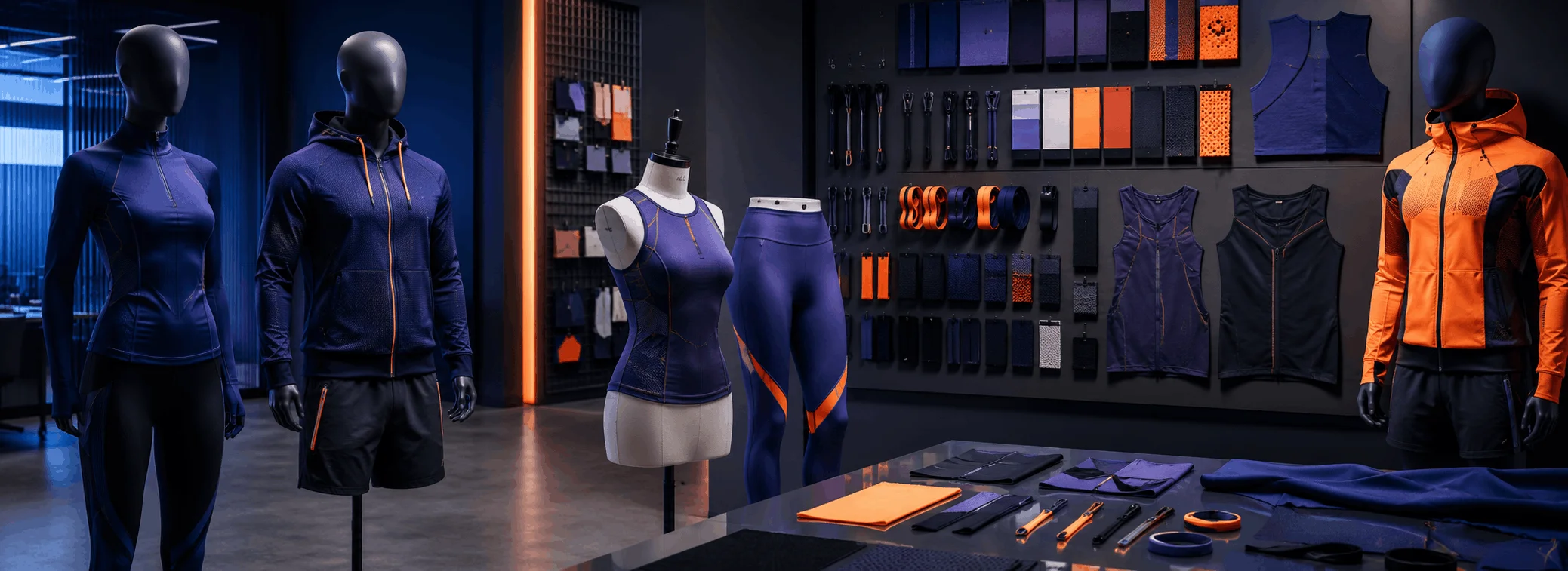
By considering competitors and market gaps, create products that are needed in the market. Custom sportswear is always appreciated, as athletes want products that fit their body needs while performing.
Consider the following to design your products:
- Perfect fit to provide accurate dimensions.
- Right fabrics to offer unique properties like moisture-wicking, temperature regulation, breathability, padding, and insulation.
- Technological advancements like heart rate monitoring, sweat control, step counting, mesh panels, and gadgets that offer tech support to improve performance.
- Tech packs and mockups to identify the digital and visual representations of products.
7. Technical Design and Tech Packs
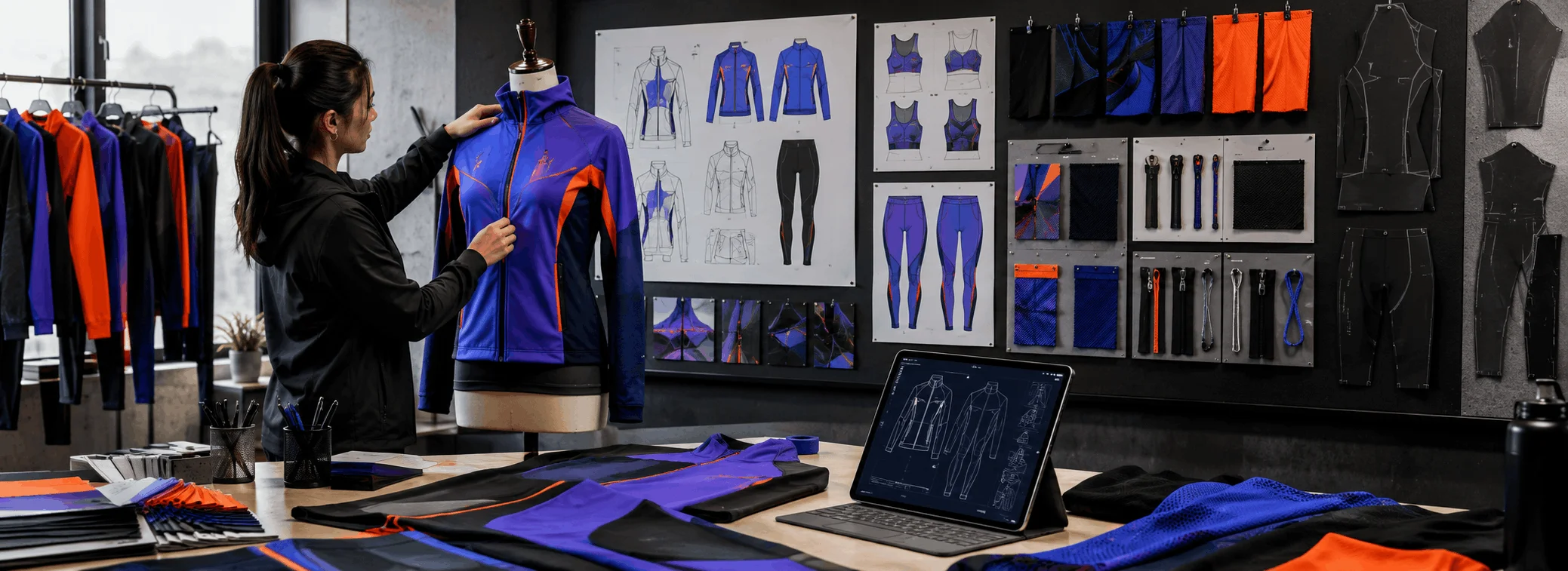
Develop a comprehensive tech pack, which is a technical specification pack. It is a blueprint of the garment that minimizes guesswork and reduces your capital used in sample development.
Here is how you can create a professional tech pack:
- Create technical vector drawings, which are flat, black-and-white 2D CAD drawings detailing the front, back, and interior views of the garment.
- A detailed index listing consisting of a bill of materials (BOM) of every single physical component. It depends on the products. For example, if your sportswear requires stretchability with durability, a blend of spandex and polyester is added in the index.
- Incorporate the grading & measurement specification sheets to show the exact point-of-measurement table outlining the garment dimensions across your entire size spectrum (e.g., XS to XXL).
- Mention the explicit instructions about stitch and seam callouts to identify the construction of the seam as significant for the garment’s structure. Add the technical variants like ISO 607 (4-needle 6-thread flatlock stitch) that help in achieving high-stretch, flat, and chafe-free seams.
8. Fabric Selection
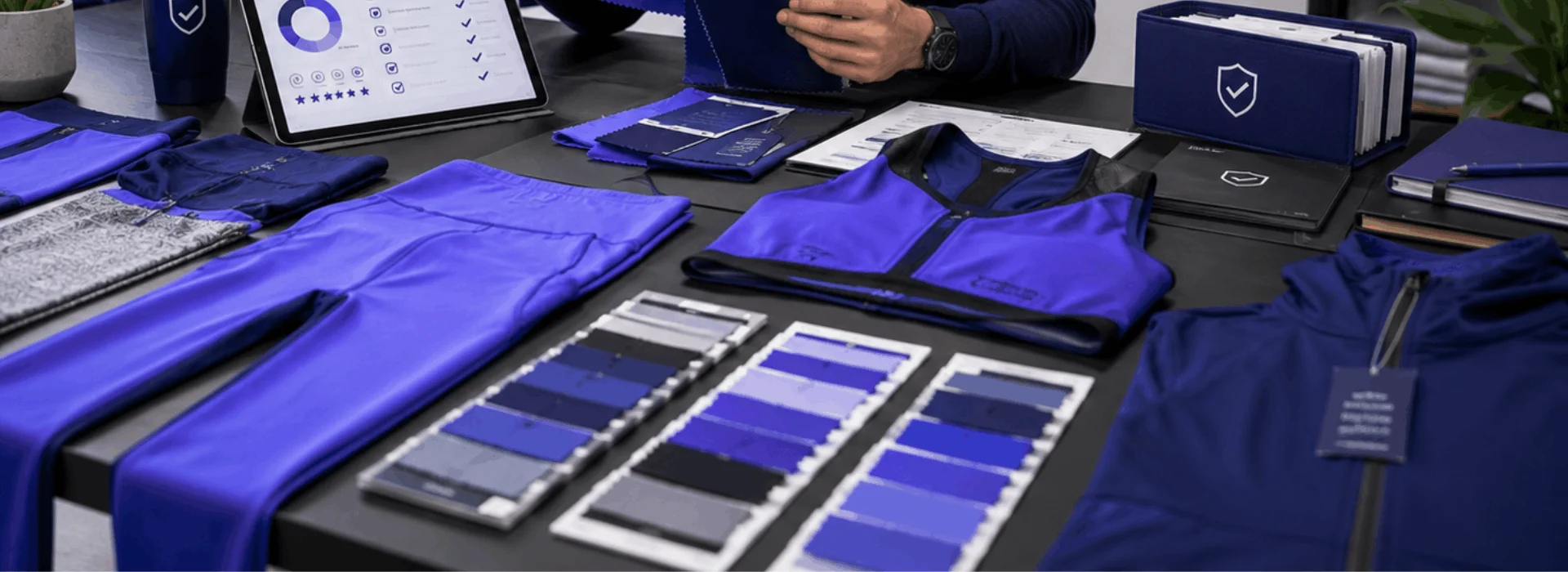
Fabric is the foundation of any garment. The composition of a product depends on high-quality fabrics that give apparel distinct properties. In terms of sportswear, fabric physics provide value to athletic activities.
Fabric quality can be checked by fiber composition and GSM (Grams per Square Meter). GSM varies across the weight and application of the fabric. Lightweight garments commonly use 140-180 GSM, while training or premium clothing fabric ranges between 190 and 220 GSM. The GSM value improves the comfort and strength of the garment.
When starting a sports apparel business, your choice of fabrics hangs between two primary categories of performance fabrics.
Let’s brief you about the performance fabrics for sportswear:
Natural Fibers
Organic fabrics found in nature are called natural or organic fabrics.
Synthetic Fibers
Processed fabrics created by man are the synthetic fabrics.
- Polyester (140–180 GSM): Durable & hydro-moisture management.
- Nylon (Polyamide) (160–220 GSM): Premium high-tensile durability.
- Elastane (Usually blended at 5–20%): High elastic recovery & structural stretch.
How to Choose Performance Fabrics?
.Analyze technical finishes to choose performance fabrics.
- Durable water repellent (DWR), which is a specialized coating applied to outer shells to shed rain without blocking the fabric's natural breathability.
- Hydrophilic wicking agents that evaporate the sweat by spreading it across the fabric.
- Antimicrobial silver-ion treatments that keep the clothing products fresh by inhibiting odor-causing bacteria growth.
9. Choose the Right Sportswear Manufacturer
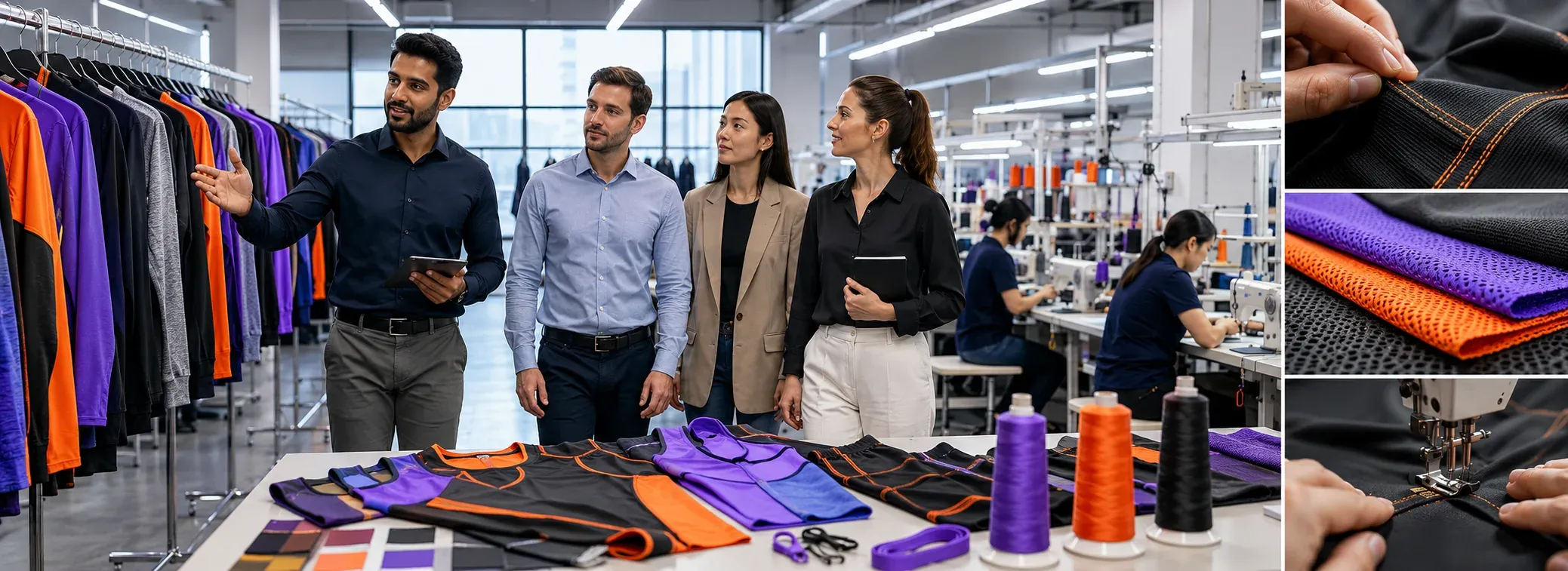
The success and longevity of your brand depend on your manufacturing partner. Working with an inexperienced clothing manufacturer can be disastrous due to lack of industry knowledge, no fabric sourcing, missed delivery windows, and overcharging.
Evaluate your sportswear manufacturer by prioritizing technical production equipment, industry experience, vast production capacity, customization expertise, fabric sourcing, advanced printing infrastructure, fast turnaround time, low MOQ, and doorstep delivery.
Here is your checklist to make the decision easy for you:
- Advanced machines to create products according to your specification.
- Minimum order quantity (MOQs) to save your money on a variety of products.
- Sample production to test the products before moving to bulk manufacturing.
- Fast turnaround time for samples and bulk manufacturing.
- Fast and doorstep delivery to save your time and effort.
- See if they follow clear AQL 2.5/4.0 quality control inspection rules.
- See if their working environment is ethical and socially certified.
10. Register Your Business

Business registration is an absolute necessity since it makes your brand legal. Without registration, you can face legal setbacks like illegal business running or tax evasion. Moreover, an imposter can register a brand using your name and you can lose your assets. Therefore, register your brand under an LLC to make it properly legal.
11. Structure Your Financial and Pricing Strategy
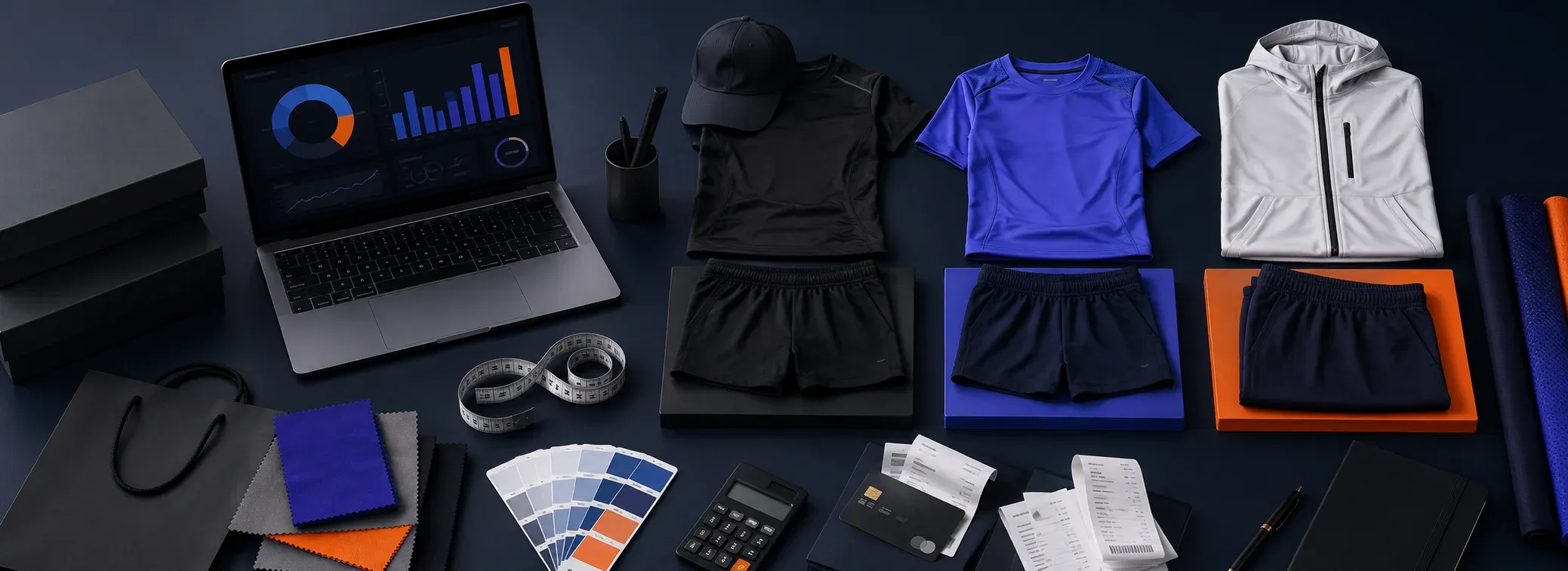
Your financial management should not be flawed, or else it could lead to failure. Conduct research to find out the prices of products in the market. You must comprehend the cost of goods sold and create an effective pricing strategy.
- Raw Fabric cost
- Manufacturing cost
- Shipping rates
- Packaging rates
- Labor charges
- Digital marketing cost
- Direct-to-customer retail prices
- Cost of goods sold
- Profit margins
Create a complete pricing plan based on all the important factors.
12. Strategic Launch & Incorporate Marketing
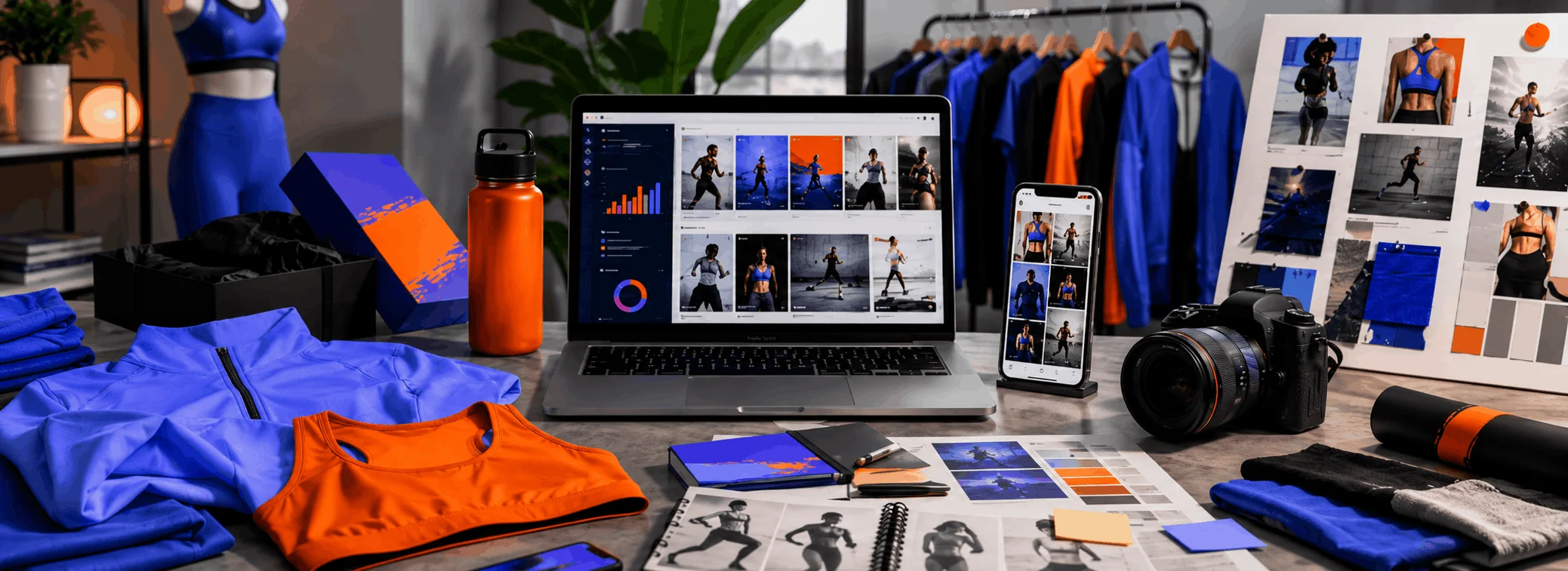
After the product development, begin your launch plan and marketing strategies to attract and acquire customers.
Build a Website
Running a sportswear clothing line without an online presence can be risky since modern consumers also shop online. A well-optimized website with all your products showcased is a big step in the modern online market. In fact, this is what your sports apparel brand needs to gain a massive number of customers.
Therefore, hire a website developer to create a user-friendly website that can offer products. Ensure that products are perfectly described with every piece of information like colors, dimensions, properties, and real pictures. Use HD images, size charts, and a proper checkout system to make the purchase easy for your customers.
Also, publish high-value, educational content that answers your target audience’s specific search queries. This is to enhance your website’s visibility in Google’s ranking. Write blogs about your products to keep the website engaged. This will capture high-intent organic traffic.
Social Media Marketing
Athletes, celebrities, influencers, and fashion enthusiasts use social media on a daily basis. You must have channels or pages on various social media platforms to market your brand and products. Post pictures and videos of your products, showcasing your logos or trademarks clearly to make people remember your brand.
Micro-Influencer Campaigns
Send samples to influencers so that they can review your products and post videos and pictures on their personal profiles. Since they have a good number of followers, people watch their stories and posts regularly, which can increase your sales. You can also pay them to promote your products.
Conclusion
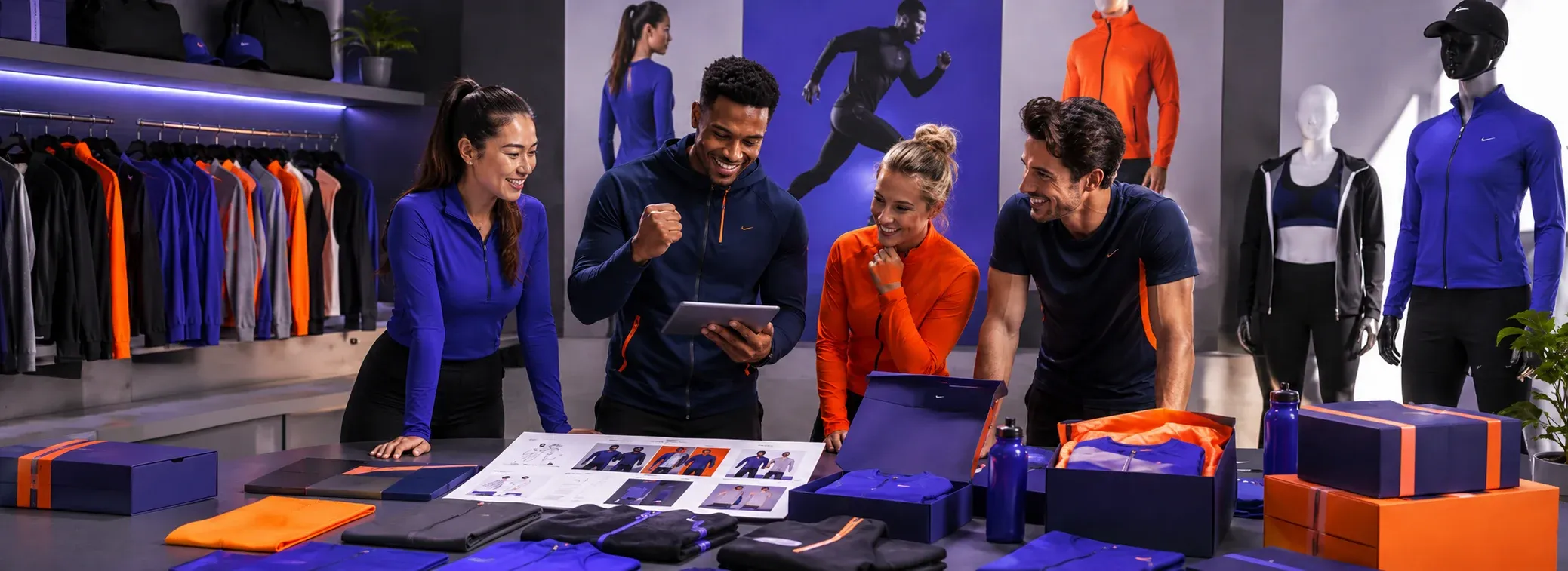
Bring your sportswear brand to life. Follow all the things mentioned in the blog to clearly form a path and launch your brand. Define your niche, conduct market research, identify your target market, create products, make techpacks, find manufacturing partners, set pricing strategies, register your brand, build online presence, launch your brand, and apply marketing strategies to promote your brand.